

I’ve been having dreams about my hometown of Phillipsburg, NJ. “P-burg,” as we called it, is a town located on the Delaware River in the northwest corner of the state. Easton, Pennsylvania, was right across either of two bridges: the “free bridge” and the “new toll bridge.”
By the time I was growing up, it was already an industrial town in decline. Two foundries still employed many people, but layoffs had begun, and the once-thriving rail industry had all but disappeared. With 18,000 residents, the town felt enormous to me then. Like most childhood places, it was only on returning as an adult that I realized how small it really was.
My most recent dream began in “Union Square,” a cluster of old buildings I remember as always being vacant. The only reason to be there was if you were coming across the Delaware River from Easton or eating at Jimmy’s Hot Dog Stand, an institution that’s somehow still there.
In my dream, I started walking uphill along South Main Street and reached my family doctor’s office, Dr. Lewis Genninger. I remember the waiting room as oddly ornate, with floor-to-ceiling curtains, two huge Ming Dynasty glazed horses, and big glazed vases on the tables. The room was really out of character for our sleepy little town.
Next door, or at least close by, I walked into the world headquarters of Phillipsburg National Bank with my dad. It was a big concrete building with columns on the front and a drive-through window on the side. At the time, it felt cavernous. Large ornate light fixtures were suspended from the ceiling, giving it the feeling of old banking money. In my dream, I was there with my dad for some paperwork. Today, it’s a medical marijuana dispensary.
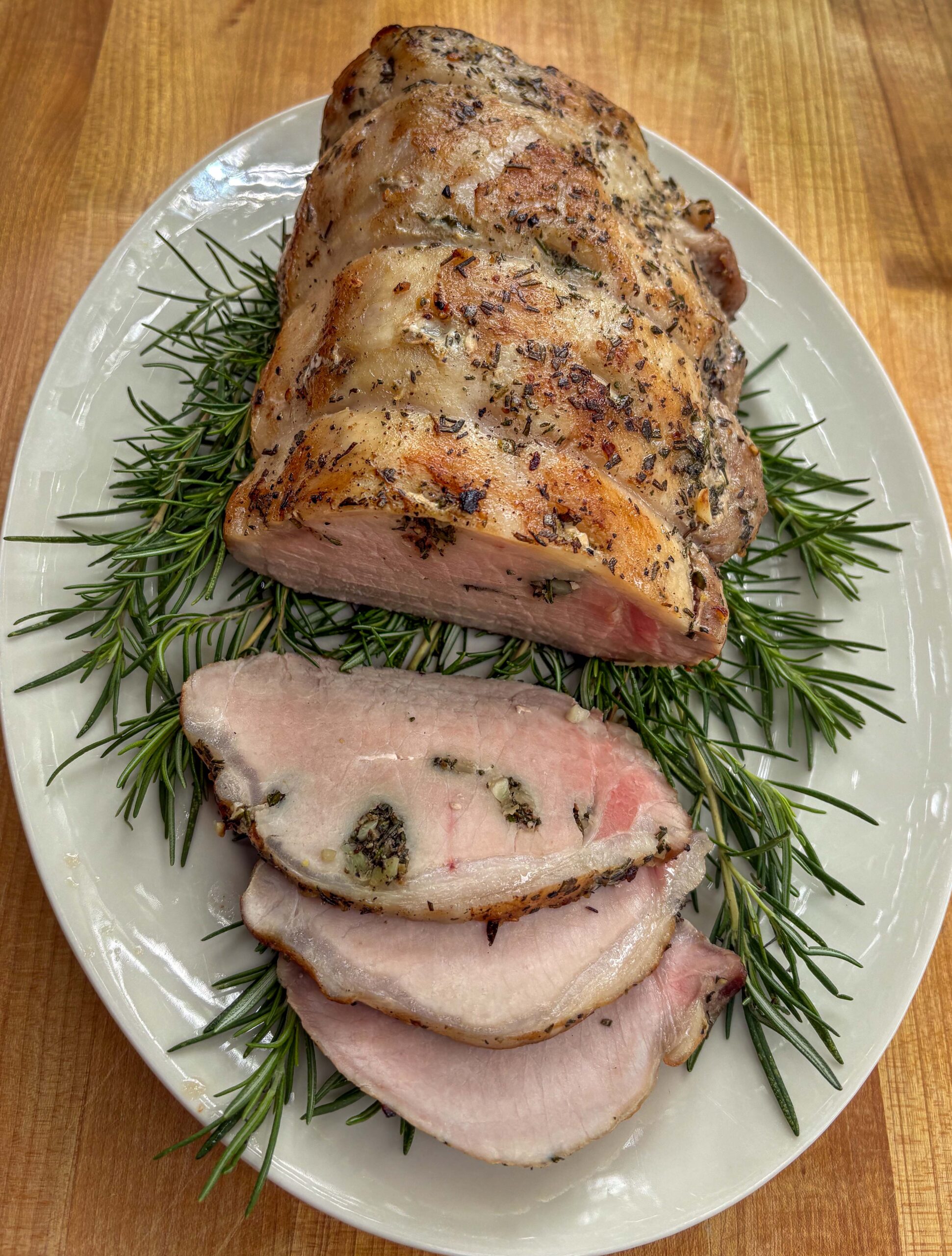
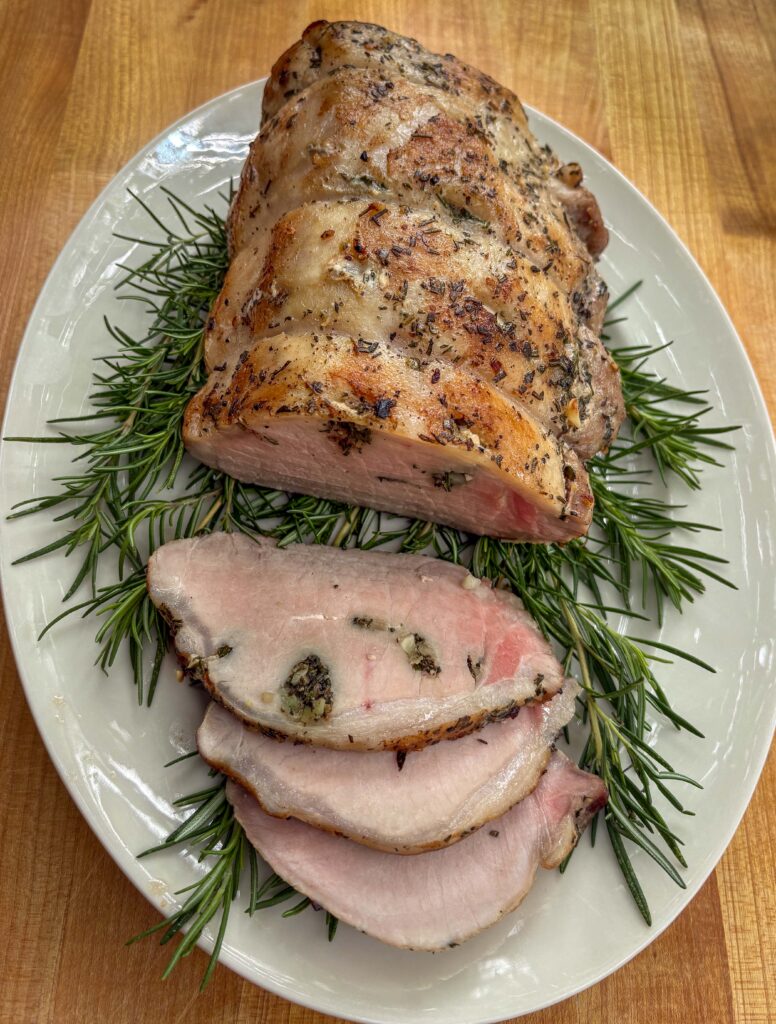
That feeling brought me back to a dish my mom, Josie, made often: a pork loin roast she called “porchetta.” In Italy, porchetta is traditionally pork belly, or even a whole deboned pig, with the skin on, rubbed with rosemary, garlic, salt, and pepper, then roasted on a spit until the skin turns deeply crisp. Nothing in my opinion comes close to grabbing a porchetta sandwich from a roadside stand in Italy.
My mom used to make her version surrounded by roasted red potatoes. I can still see the large Pyrex dish coming out of the oven, the smell of rosemary filling the room. The next day, cold slices of the pork straight from the fridge, tucked into bread for a sandwich, always left you hungry for more.
I now prefer to cook the potatoes separately because they do better at a higher temperature. You can roast them while the pork rests. Pork loin is an inexpensive cut of meat, but it’s very easy to overcook. It’s a safer bet to cook it low and slow once you’ve browned it. Be sure to watch the temperature carefully, or you’ll end up with something closer to cardboard. Pull the roast at 135℉.
The memories of this dish are seared into my mind, just like our hometown. The smells are the same, but the town has changed. The bank is now a different business. The waiting room is surely gone. The town itself exists now as much in memory as it does on a map.
But that porchetta, her version of it, still holds. Not authentic, not textbook, not something you’d find on a roadside in Italy, but it was ours. My mom’s. A pork loin instead of a whole pig, no crackling skin, just rosemary, garlic, salt, pepper, and those red potatoes soaking up everything in the pan. It didn’t need to be anything more than that.
They say that you can’t go home again. Maybe that’s true. But every once in a while, without even trying, you catch a glimpse of it anyway, in a dream, or in a bite of something familiar, and for a moment it feels just as big as it ever did.

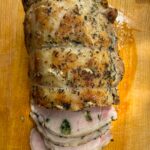
Josie’s “Porchetta”
Description
This memory-evoking dish makes plenty for 4-6 people. The leftover pork is great on sandwiches with a little mustard. Be sure to get pork loin with the fat cap still attached (you need that fat for flavor as it melts all over the pork). This dish is near impossible to make without a meat thermometer, so I don’t recommend making it unless you have one.
Ingredients
- 3 lb pork loin roast, fat cap still on and tied if your butcher can do it for you
- 6 or so sprigs rosemary
- 3 garlic cloves, peeled
- 2 tsp kosher salt
- 1 tsp ground pepper
- Extra virgin olive oil
For the pan sauce: Splash of white wine and chicken stock
Equipment:
- Kitchen twine (if not tied by the butcher)
- Meat thermometer
Instructions
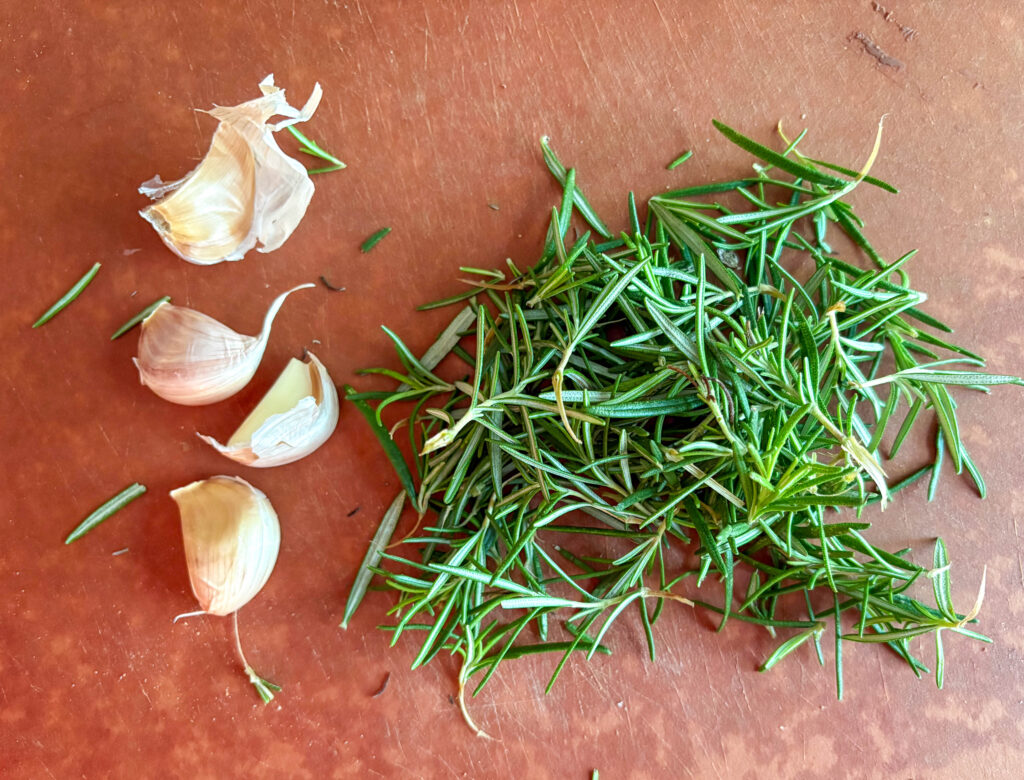
- Finely chop together the rosemary leaves and garlic and place in a small bowl. Add the salt and pepper, and about 1 tbsp of olive oil. Mix into a loose paste.
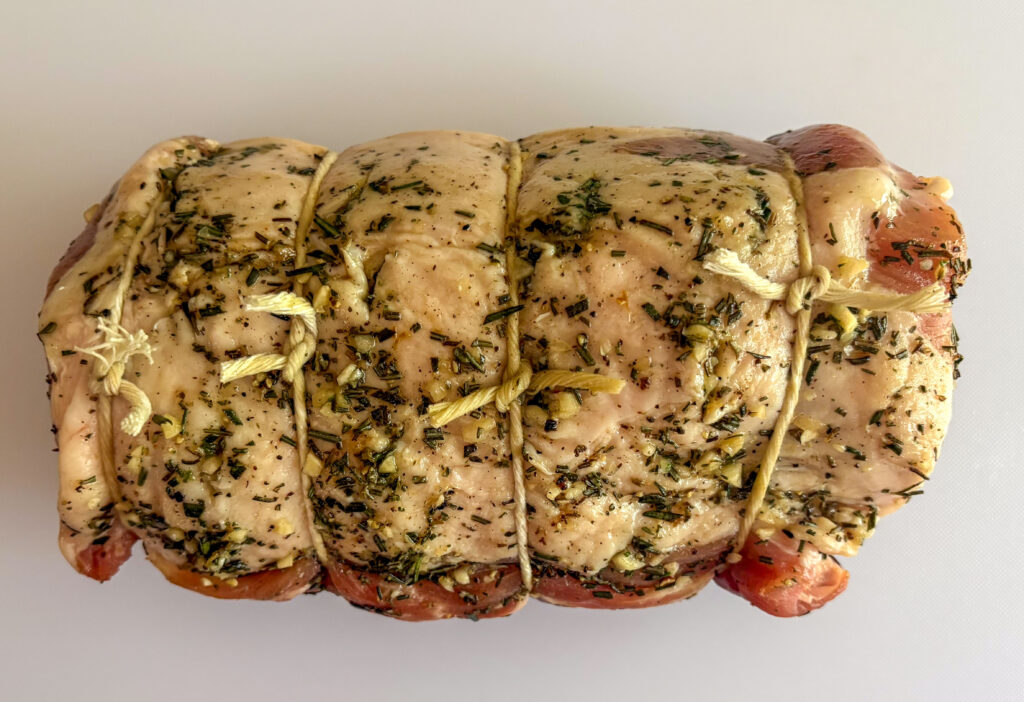
- Using a sharp knife, make slits all over the pork roast and on the sides. If the roast is already tied, don’t cut the string. Using your index finger, wiggle each hole open and push some of the seasoning mix in each hole. Rub any remaining seasoning all over the pork roast.
- If not done so already, tie the pork roast with kitchen twine as shown. This is much easier if you have someone help you.
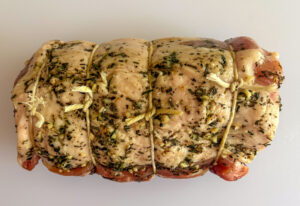
- Preheat the oven to 250℉ and place an oven-proof skillet (stainless steel or cast iron) on the stove. Heat over medium-high heat. Brown the tied pork roast on all sides, starting with the fat cap. Rotate it using big tongs.
- Rotate the roast so the fat cap is on the top side and place the skillet in the oven. Cook until the internal temperature is 135℉. About 1 hour for a 3 lb roast.
- Remove the skillet from the oven and place it on the stove. REMEMBER the skillet is blasting hot at this point. Cover the roast with aluminum foil and let it rest for 10-15 minutes. The internal temperature will rise to around 145℉ (the recommended food-safe temperature for pork).
- Move the roast to a cutting board. Snip off the twine and cut into thin slices.
- In the skillet, the pan juices and brown bits will remain. Reheat over low heat, add a splash of white wine, and scrape up the brown bits. Add a little chicken stock (about a quarter cup) and stir. Taste and adjust the salt and pepper. Serve over the sliced pork.
- Category: Dinner, Italian, Main course
I’m going to make this for Sunday dinner
Thank you
Joe this recipe brings back sweet and loving memories of my very loving mother, may she rest in peace. As a child. I would stand by my mom as she was doing the exact same thing as you do except she would use parsley instead of rosemary because we didn’t have any. Sometimes my mom would let me be the one to stuff the roast and I would stab and stuff. Unfortunately, since I married and not having a wife that had the same environment as I had growing up,she didn’t cook the same foods. She too was a great lady as my mom. But I fault myself for not doing some of the cooking that I grew up with even though the BBQuing was left up to me. I promise that I will cook this roast and have my present wife experience some delicious food that she’s never had. I will also will.ne making sauce with braciole very soon. Gracie Miller, Benedetto.
That’s a wonderful story. I hope it stirs up your memories like it did for me. Joe
I visited Italy in 2019 with a friend and stayed on Capri for a week or so. I recall the mouth watering taste of the pasta that literally melted in my mouth like butter.
A reason to find the recipe- my grandson just had a 12th birthday asking for pasta acccessories for his mom’s stand mixer eager to make his own pasta.
Please help me with homemade pasta making any recipes or tips for creamy pasta will be appreciated.
Another remembrance in Naples near the waterfront a restaurant with a friend fish not sardines anout 4” x2” mouthwatering so much 7 years later I remember the taste wondering what it was not fishy tasting or
smelling but so amazing
Hi Neal: Thanks for your comment.Capri has a rich food tradition that mostly centered around the surrounding sea and the island’s amazing locally grown produce. But Capri also has many other Italian dishes imported from other close regions. My guess is this was Pasta Cacio e Pepe made with egg pasta (vs. dry pasta that you buy in a store which is more common in southern Italy). Here’s a recipe on our blog -> https://ouritaliantable.com/cacio-e-pepe/ . You can find lots of other ones on the internet. I hope this hit the mark.
Thanks. Joe