
Almost every December, I sneak away to Montalcino, even though I know I should be home planning our Seven Fishes feast (a big tradition for our family) or putting up the decorations for Christmas. It’s my quiet rebellion against the version of Christmas that arrives far too early here in the US, carried in by a flood of Black Friday sales, Cyber Monday emails, and the absolutely relentless onslaught to buy more, sooner.
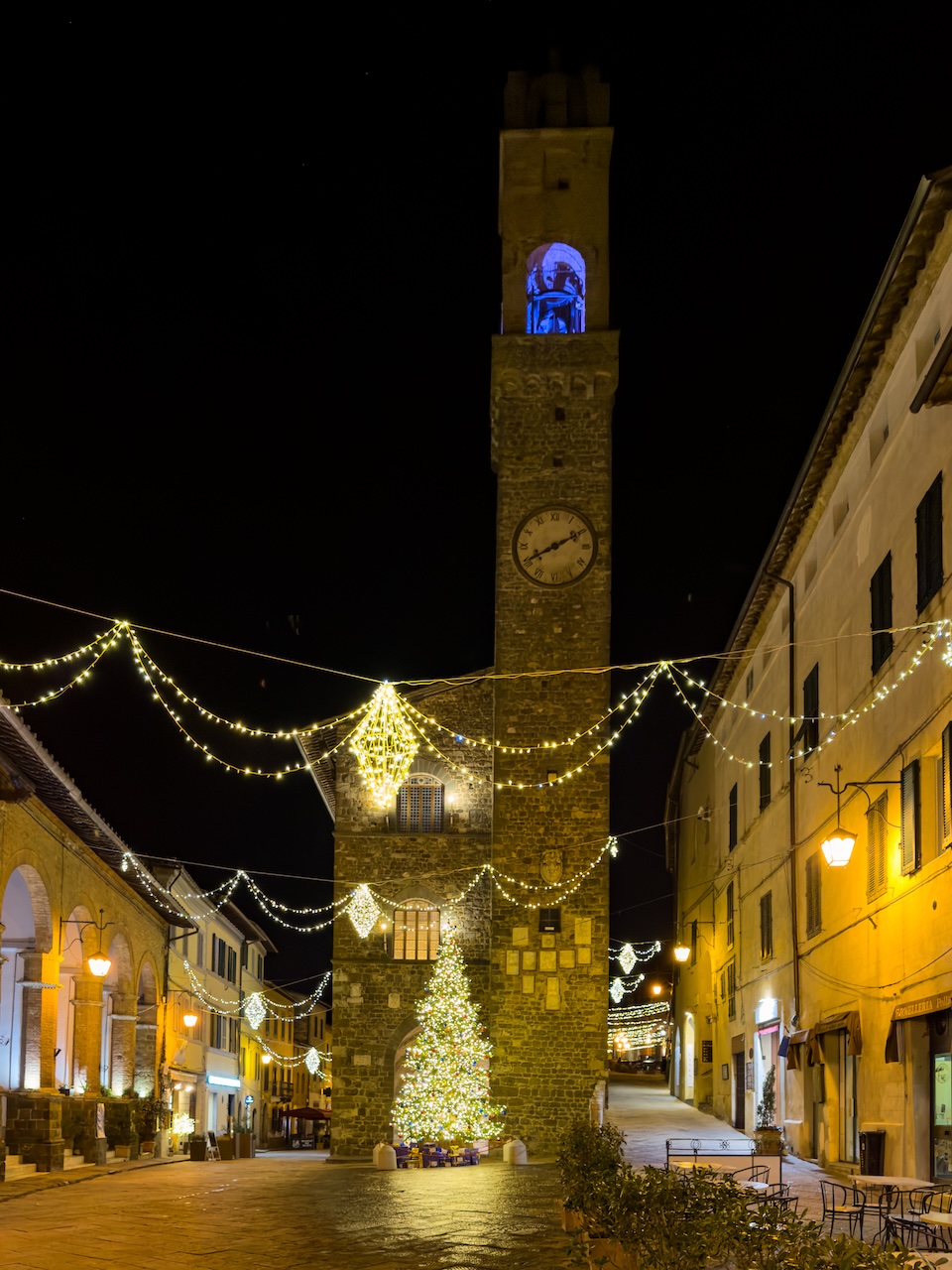
I go because the village feels like a long, beautiful exhale. Christmas there is quieter, gentler. The village is dressed in simple twinkling lights. This year, a marching band wandered through the town at dusk, villagers following behind them, before everyone ended in the piazza for a singalong. Over the weekend, a small Christmas market set up in the piazza selling items made with love: new olive oil and honey, local pecorino, handmade olive wood utensils, pottery, and jewelry.
Even the Olympic torch passed through the village on its way north to the Winter Games, carried with the same quiet passion and pride that seem to mark the season in Italy. All a reminder to me that the simplest gifts, given from the heart, are the ones that hold the most love.
December gives me the room to exhale. Room for Jay and me to linger longer than planned with friends. To spend unhurried mornings in my apartment without guilt. To curl up under thick blankets from Massimo’s shop and read as the light fades way too early outside. To linger in the kitchen with my haul from the Friday vegetable market and wonder what to make for dinner, letting it take exactly as long as it wants. In this quiet, the constant hum of busyness fades, and I can breathe.
Winter arrives quietly in Montalcino. This year, it’s been warmer than usual, almost springlike, which makes the stillness feel even more pronounced. No sharp frost, no drama. Just soft air, bare hills, and lots of morning fog.
Trucks pass carrying firewood instead of grapes. The local hardware store is stocked with small heaters and oversized wine jugs. The air smells of wood smoke, from chimneys and from farmers burning the prunings from their vines and trees.
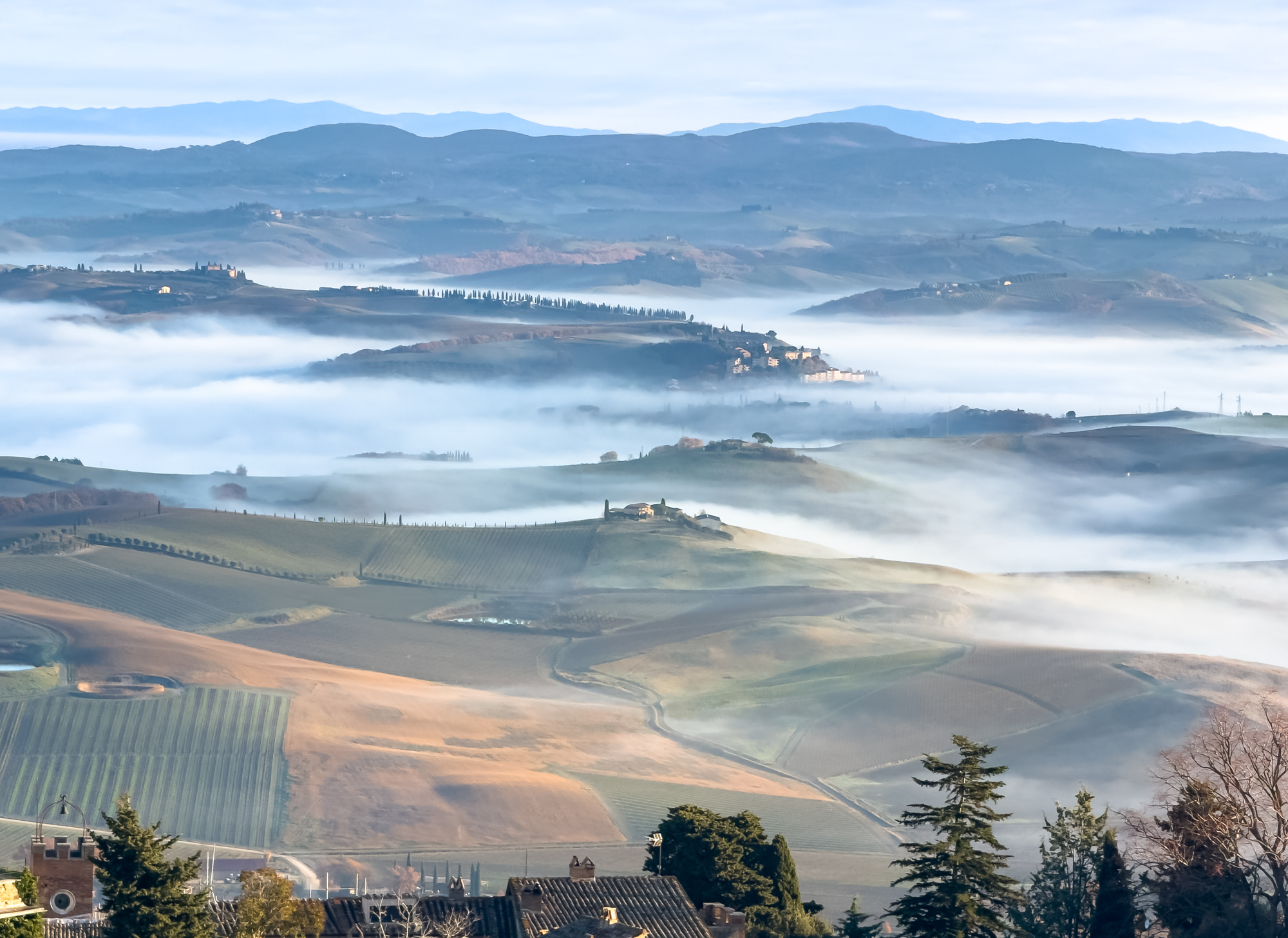
There is a sense that the valley has settled into itself after the long stretch of harvest. And it invites you to do the same. This is the season that steals my heart every year.
The vines are bare now, stripped down to their essential lines. Leaves gone. Fruit long since pressed and resting in the dark cellars across the hill. What remains is structure: wood, wire, patience. Even in this gentler winter, the vineyards feel as if they’re resting, rebuilding, waiting.
We spent time with our dear friends at NostraVita, where I was able to walk among the bare vines, taking photos. There wasn’t much to seein the obvious sense, but there was a lot to notice: the shape of each plant, the quiet work already underway beneath the surface, the beauty of the starkness.

I am not a winter person by any measure, so I never expected winter to claim me the way it has here. But each year, I’m reminded that rest doesn’t always look like cold or stillness. Sometimes it looks like warmth without urgency. Like growth happening quietly, beneath the surface, while on the outside everything appears to be resting.
Inside the vine, next year already exists. Energy has been pulled inward now, tucked deep into the trunk and roots, saved for later. Nothing above ground gives this away, but the work is happening all the same. December has a way of reminding me that what matters most often happens out of sight, and that some things simply can’t be rushed.

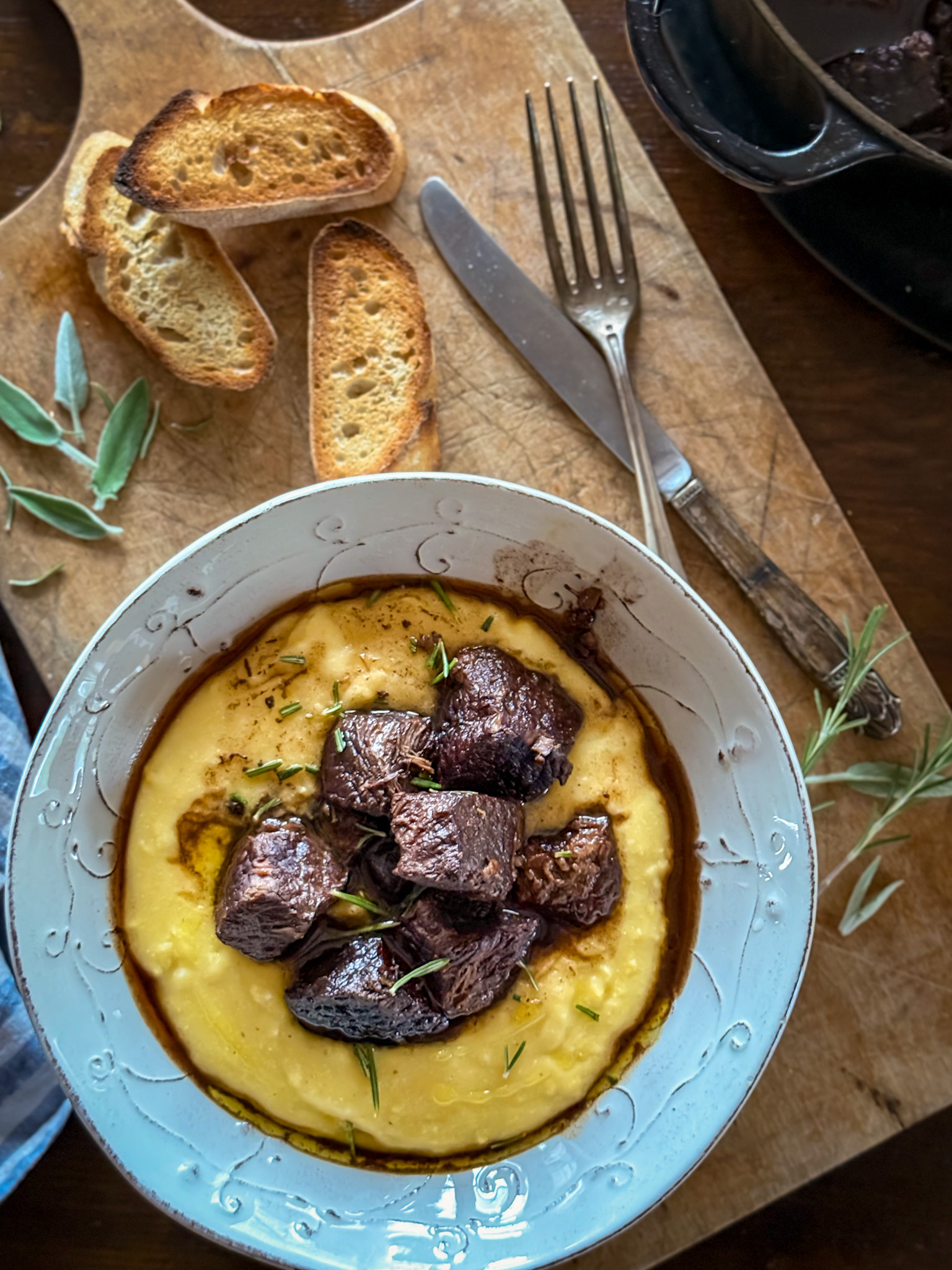
Malfada’s Peposo alla Toscana
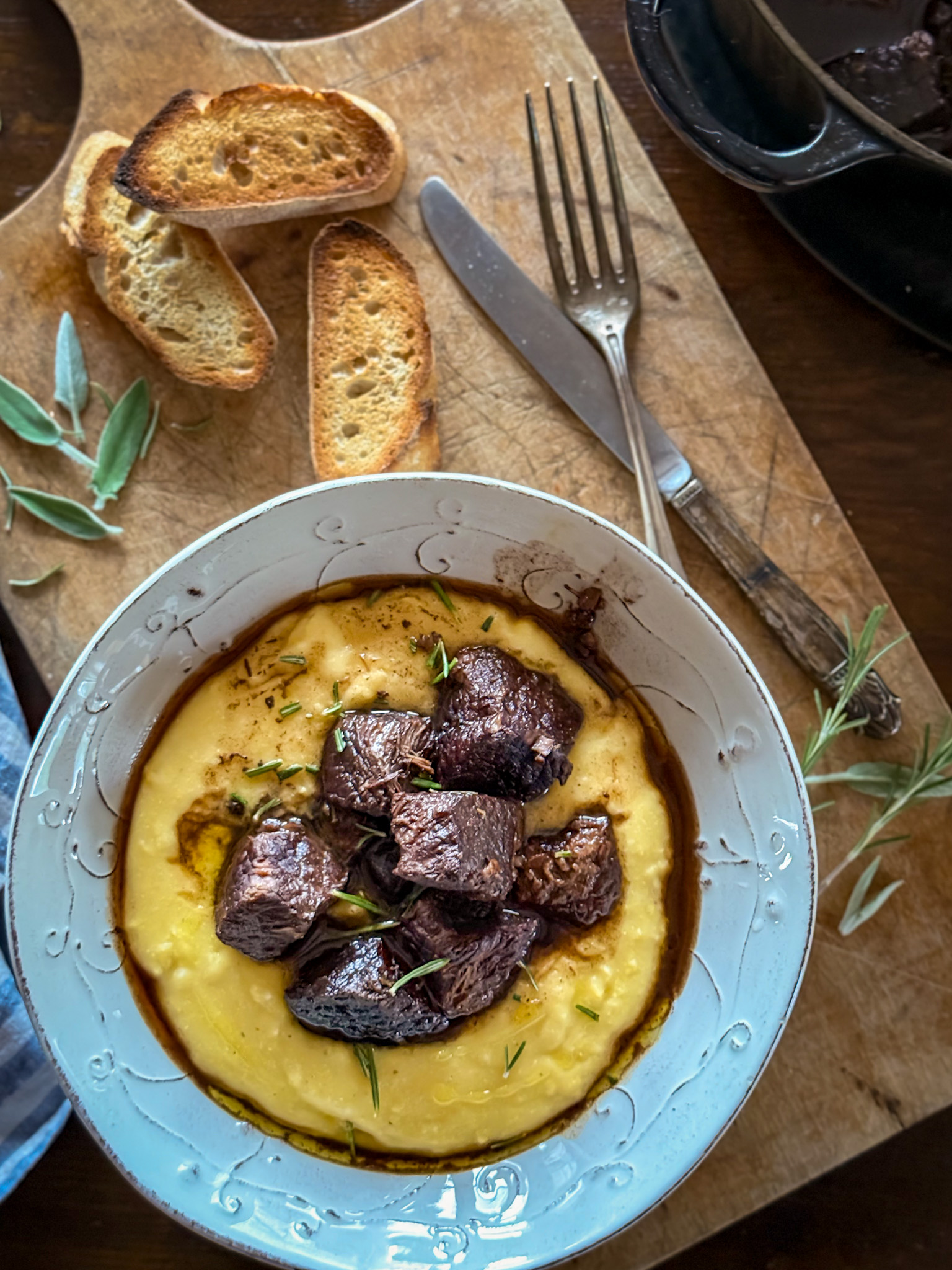
In the kitchen, the rhythm follows suit. This is the time of year when I crave food that warms things from the inside out. Slow braises that melt into themselves. Soups that quietly simmer while you do other things. Food you can mostly leave alone, trusting it to get better while you’re not paying attention.
While I was in Montalcino, I met up with a friend’s son, Arturo, freshly back home after time spent working in Paris kitchens. (Head on over to follow him on Instagram!) Over a coffee, we talked about what we’ve been cooking lately, the dishes he grew up with, and the recipes he learned from his grandmother, Mafalda.
Mafalda is someone you may already know. She’s a beloved part of the cooking tours I’ve run in Montalcino, and our guests adore her, especially teaching us how to make gnocchi. So when Arturo mentioned her peposo, a dish I’ve always loved, dark and peppery and made to take its time, I knew that I had to make it soon.
Peposo is one of Tuscany’s great winter dishes. Born in the kitchens near the kilns of Impruneta, it’s a dish built on patience and heat rather than technique. Beef, wine, black pepper, and garlic are left to do their work over time.
It simply belongs to winter. No fuss, no rush. You set it on the stove and trust that, given enough time, everything will soften into place. Something cozy and warming for these short winter evenings.
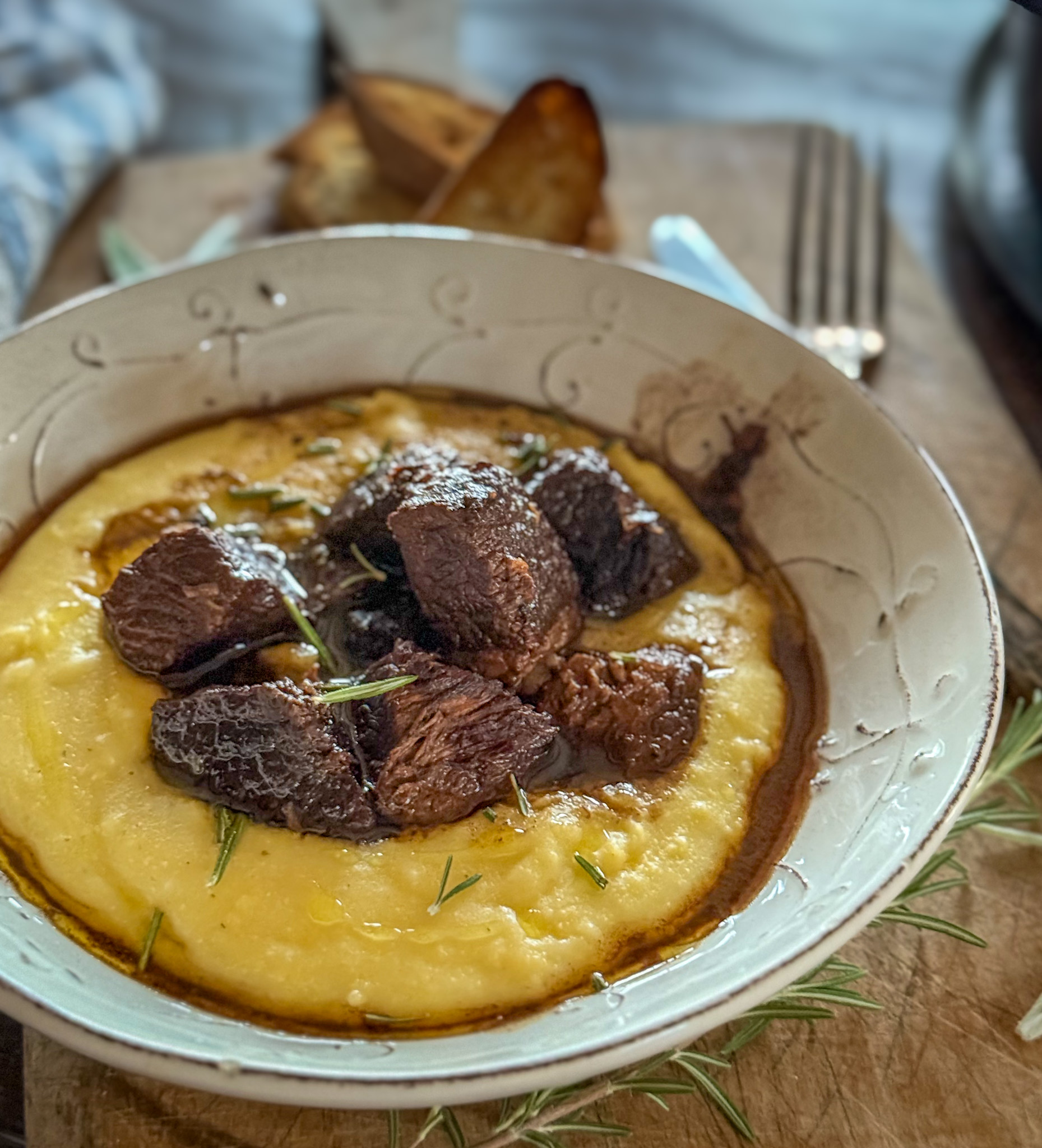
For Mafalda’s version of peposo, the meat is browned deeply, then left to soften and darken in its own time, until tender. Like the season itself, peposo takes shape when we stop watching the clock
A few notes about the recipe:
· Arturo suggested using top blade, which is common in Italy. In the US, look for beef chuck roast or flat iron. You want well-marbled beef that improves with long cooking.
· Let the meat deeply brown. Do not rush this step. You are not just browning; you are building flavor. Arturo’s recipe said explicitly, “You let it cook until there is a good crispy texture on the outside of the meat. Very important that the meat is well roasted on every side.”
· This is not a dish to hover over. Once it’s underway, let it be. Peposo teaches the same lesson as winter vines: time does the real work.
· Peposo improves with time and is even better the following day.
A note about quantities: Arturo’s recipe used a measurement found very often in Italian recipes: ‘q.b.” His ingredient list had the following:
- Olive oil, q.b.
- Rosemary, q.b.
- Sage, q.b.
- Bay leaves, q.b.
This stands for quanto basta or “as much as is enough.” Which is to say, not a measurement at all. It’s an invitation. A reminder to trust your senses instead of a list of quantities on the page. Taste. Smell. Adjust. The dish will tell you what it needs.
Why the Quiet Seasons Matter
Now back in Pennsylvania, I am writing this as the peposo simmers on the stove. The house smells heavenly. Ever since returning from Montalcino, I’ve been thinking about how much we all need our own version of Montalcino, whether near or far: places that remind us that rest is part of the rhythm, that quiet has its own kind of music.
It’s easy to love the village in summer, when everything is bright and buzzing, or in autumn, when the bustle of the harvest envelopes the valley. But winter there offers me something different: a chance to listen inward, to reconnect with the simple rituals that hold my days together.
Maybe that’s why this month steals my heart every time. It slows me down. It brings me home to myself. Lately, I’ve been aware that I’m gathering something. Like stones laid along a path I walk often, between vines and tables, seasons and meals. Taking notes. Letting time do some of the work.
For now, I hope your own December holds moments of warmth, stillness, and a little bit of magic wherever you may be.
Buon Natale, dalla nostra tavola alla vostra…..wishing everyone a beautiful Christmas from our tables to yours.


Tuscan Peposo (Italian Black Pepper Beef Stew)
- Total Time: 3 1/2 hours
- Yield: 4–6 servings 1x
Description
Peposo is a bold Tuscan beef stew slow-cooked in red wine with garlic, herbs, and plenty of black peppercorns. Deeply savory, tender, and comforting, this rustic Italian classic is perfect for cozy dinners and make-ahead meals.
Ingredients
- Extra-virgin olive oil
- 4½ pounds (2 kg) beef chuck, cut into large cubes (about 2 inches)
- Kosher salt
- 3 garlic cloves, lightly crushed
- 1 large sprig rosemary
- 4–6 sage leaves
- 2 bay leaves
- 4 cups (1 liter) dry red wine
- ¼ cup (about 35 g) whole black peppercorns (Lightly crush a spoonful if you want more bite.)
Instructions
- Drizzle a few tablespoons of olive oil in a large, heavy-bottomed pot or Dutch oven over medium-high heat. Add enough beef for a single layer and cook until deeply brown. Remove the beef to the plate and repeat the process until all the beef is seared. Let the meat brown deeply. Don’t rush this step.
- Add all the beef back into the pot. Season generously with salt. Add the garlic, rosemary, sage, and bay leaves. Stir for a few minutes to combine.
- Add the red wine and peppercorns. Bring to a boil, then reduce heat to a simmer. Cook uncovered for the first 30 minutes.
- Cover partially and let the peposo cook gently for about 3 hours, stirring occasionally, until the meat is very tender and the sauce is reduced slightly.
- Taste and adjust salt. Let rest briefly before serving. Serve with polenta, crusty bread, or nothing at all.
Notes
- The original Italian recipe suggested using top blade which is common in Italy. In the US, look for beef chuck roast or flat iron. You want well-marbled beef that improves with long cooking.
- Let the meat deeply brown on each side. Do not rush this step. You are not just browning; you are building flavor.
- This is not a dish to hover over. Once it’s underway, let it be.
- Peposo improves with time and is even better the following day.
- Prep Time: 30 minutes
- Cook Time: 3 hours
That looks so Yummy, nice one!