

Originally published in 2011. Updated July 2026 with a new recipe, new photographs, and the version I learned from my friends in Sicily.
Summer here in the eastern US has been mostly filled with hot, hot days punctuated with teaming downpours. Unusual weather patterns again. But summer has always been my favorite season. Long, slow days when the light just won’t quit; days where we can sit along the river with a dock-tail in hand, doing little more than watching the river roll by; days where we can invite friends over for a dip while we roll out pizzas.
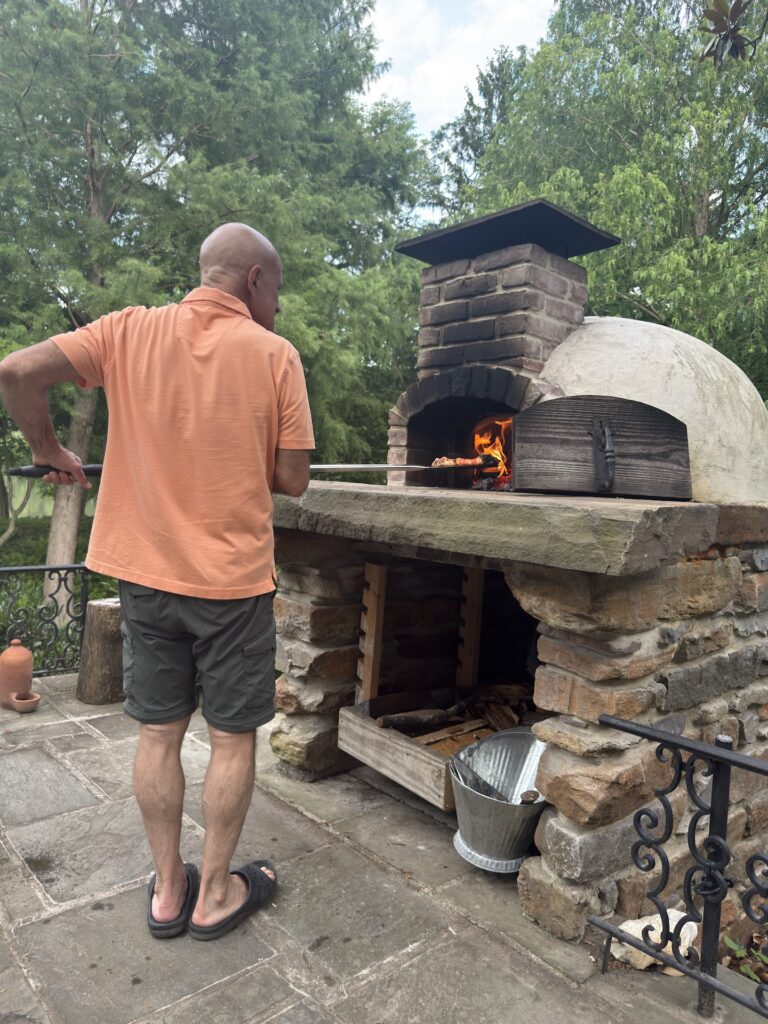
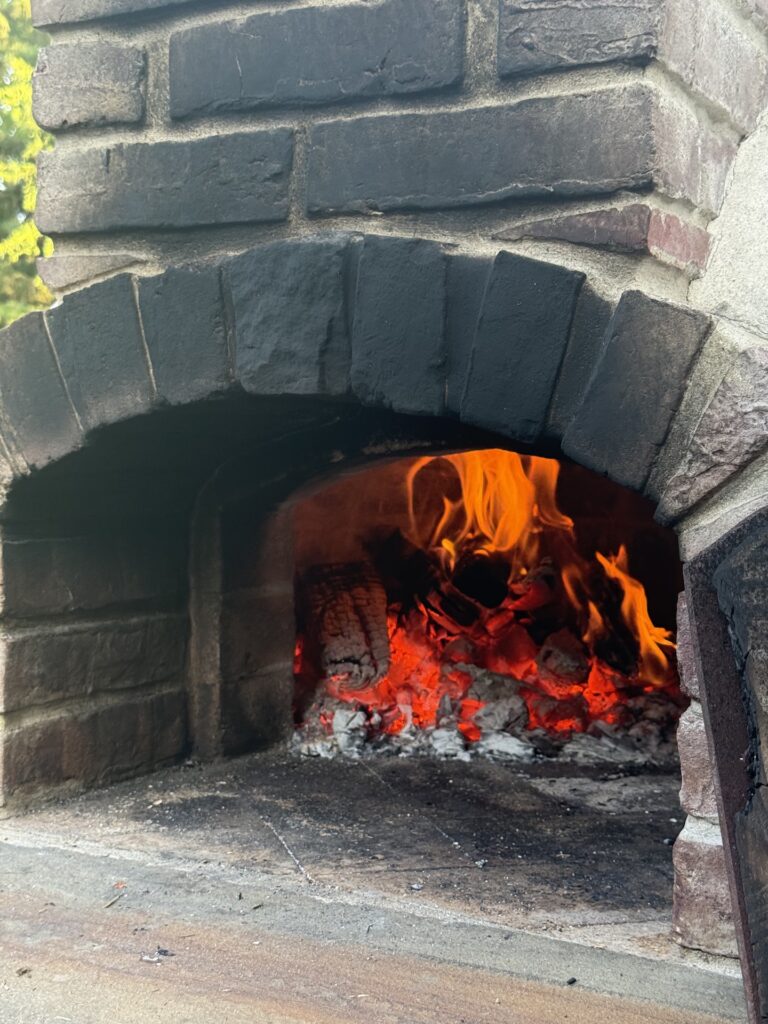
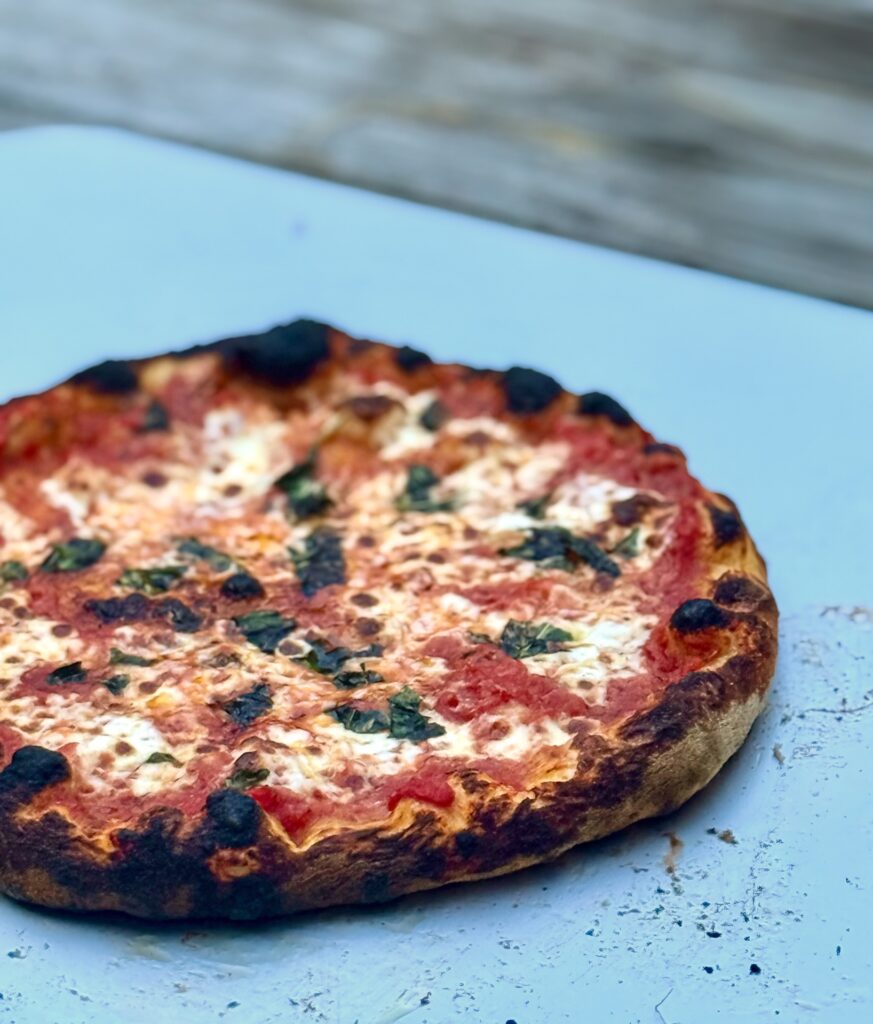
You may remember that Jay built a pizza oven two summers ago; from the ground up. It is a work of art. Last summer, we mostly wrestled with figuring the thing out. Misshapen over/under cooked pizzas were the norm, despite our best attempts. But I am proud to say that this summer, things are humming! Pizzas have been flying out of the pizza oven for friends. Jay has the fire side of things in great shape. My dough, although not yet perfect, is at least of good enough quality that I no longer have to buy ‘backup’ dough from the local pizzeria. (Still working on our optimal hydration rate!) We are mastering the art of the overnight roast after the roaring fire starts to die down (although there was one beef roast that ended up as charcoal). A small but exciting victory!
And with summer in full force, the race to use all the summer produce is on. Tomatoes, zucchini, cucumbers, basil everywhere. We all have that summer repertoire of recipes that we have on repeat. Our tomatoes are now coming in in full force, and absolutely nothing comes close to that first bite of a ripe tomato from the garden each summer. This year, it has been a bit of a battle as to who gets to the tomatoes first – me or the exploding squirrel population. The little buggers have managed to nibble on almost all my low-hanging San Marzano tomato plants …grrrr.
Second favorite…when the basil plants start looking like small shrubs. It feels so indulgent to step outside and snip enough leaves to fill a bowl. At the end of summer, I typically make batches of classic basil pesto and tuck them into my freezer for when I am craving that fresh summer basil taste in the dead of winter.
A few new pesto recipes have made their way into my summer rotation. One that I have been making a lot of is this pesto trapanese, which hails from the western edge of Sicily.
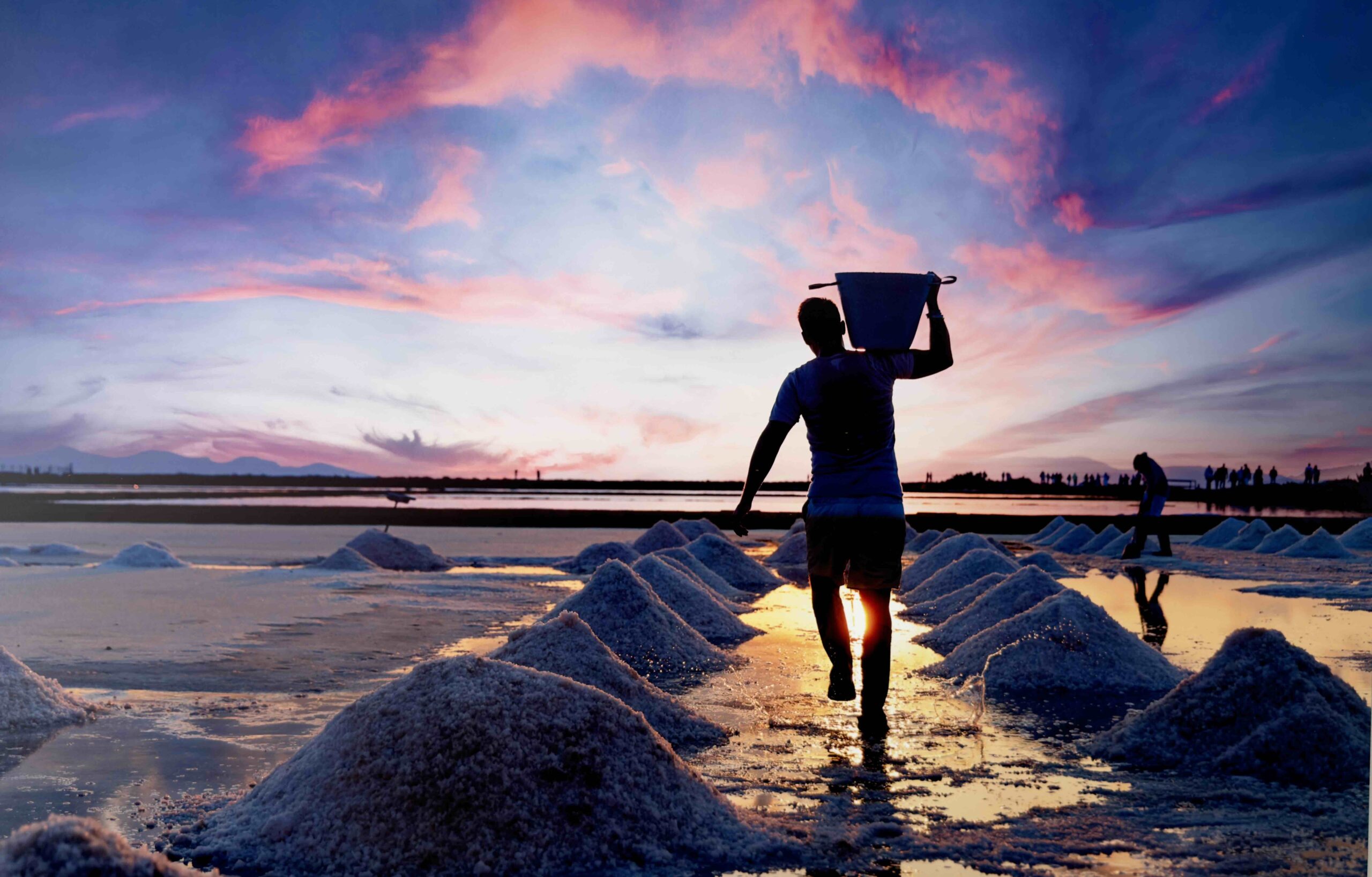
This pesto originated in Trapani, a land where the shallow pans of the salt flats make their way out to the sea. I have visited the salt flats many times during my visits to western Sicily. They are an impressive sight. I can imagine the guys in the mid-1800s (when the first classic basil pesto is documented), tired at the end of a long day harvesting salt, sitting by the water relaxing as a Genoese ship, all sails and rigging, eases into port on its way east. Down the gangplank they come with a gift of their sauce made of basil, garlic, and pine nuts. I can envision the cooks of Trapani quickly whipping up a batch of THEIR pesto…almonds instead of pine nuts; tomatoes instead of basil. Maybe they even traded recipes?
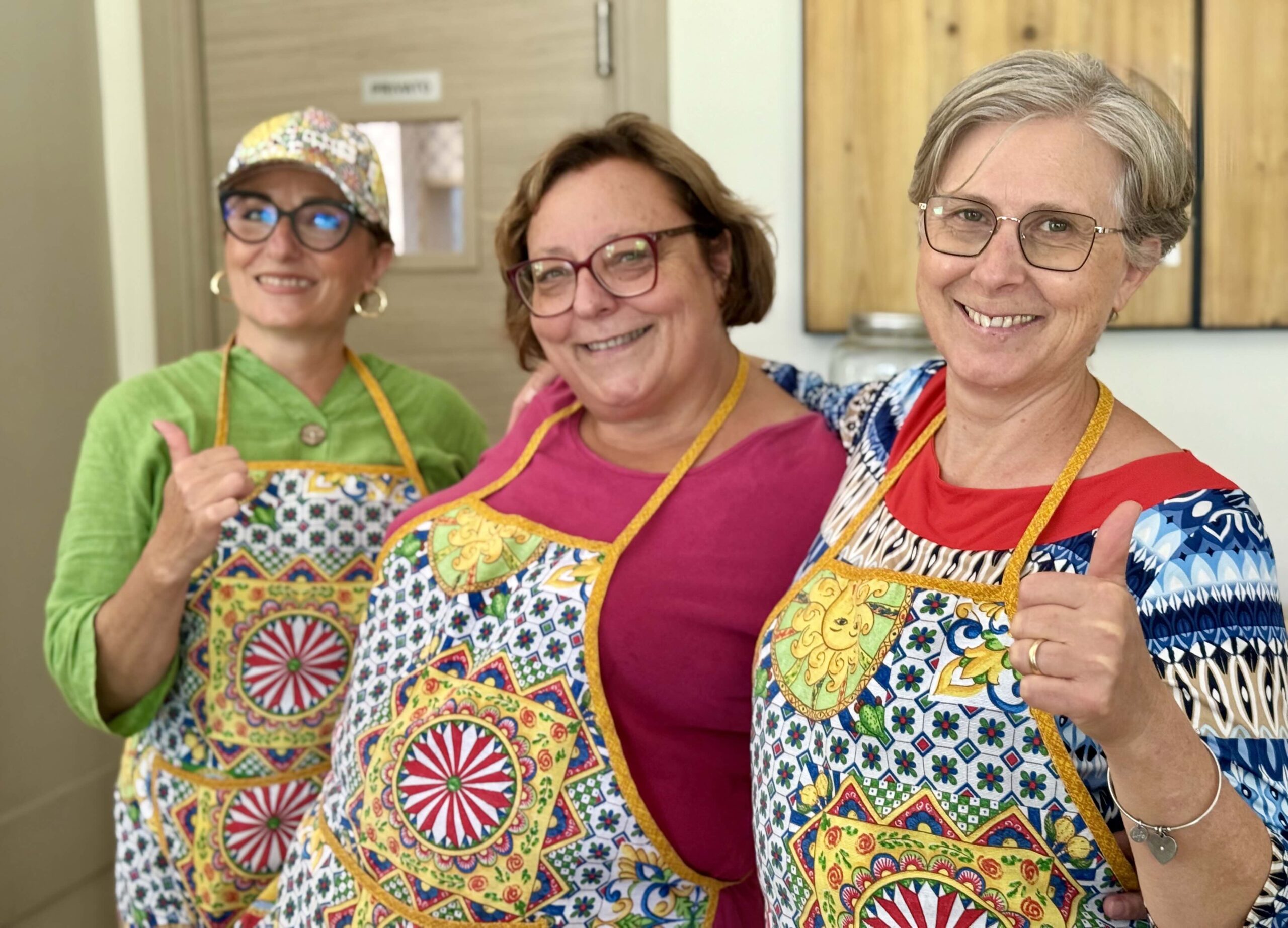
Many years ago, I first made this pesto after reading about it in an Italian magazine. However, it was only a few years ago that I learned to make it from cooks in Sicily. In a farmhouse kitchen in the little town of Salemi, about an hour inland from the flats, I learned from three women, Teresa, Erina, and Enza, who have become known to me as La Squadra, the team. Together, we cooked for six hours, and I left with a notebook brimming with ideas and recipes. This is their version.

Pesto Trapanese
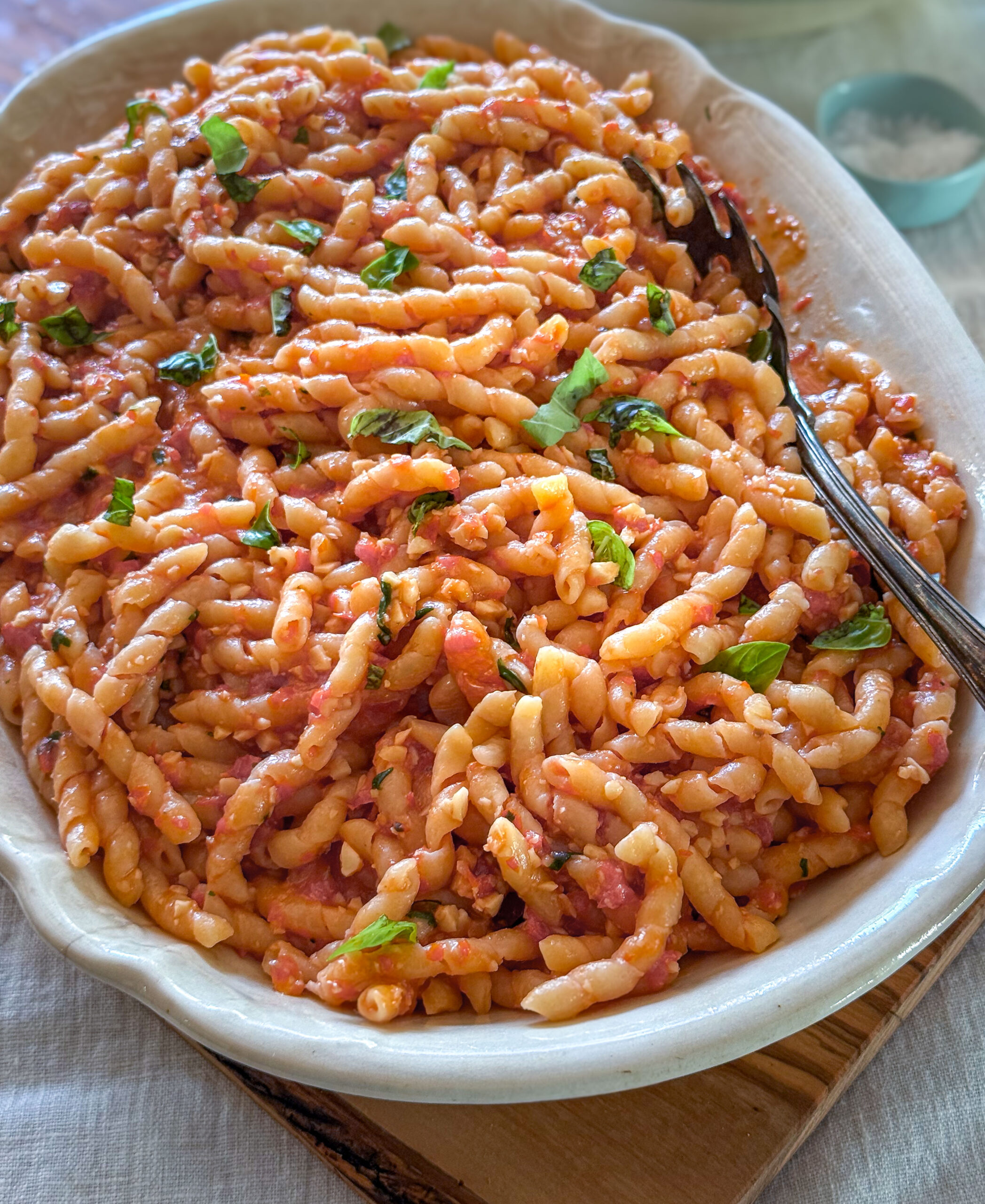
I love this sauce because nothing is cooked except the pasta. The tomatoes stay raw. The almonds stay raw. The sauce is finished before the pasta water even boils. And the bright flavor of high summer tomato shines through. In fact, I would argue that nothing matters more than the tomatoes in this recipe. This is a recipe to be made only when tomatoes are at their best.
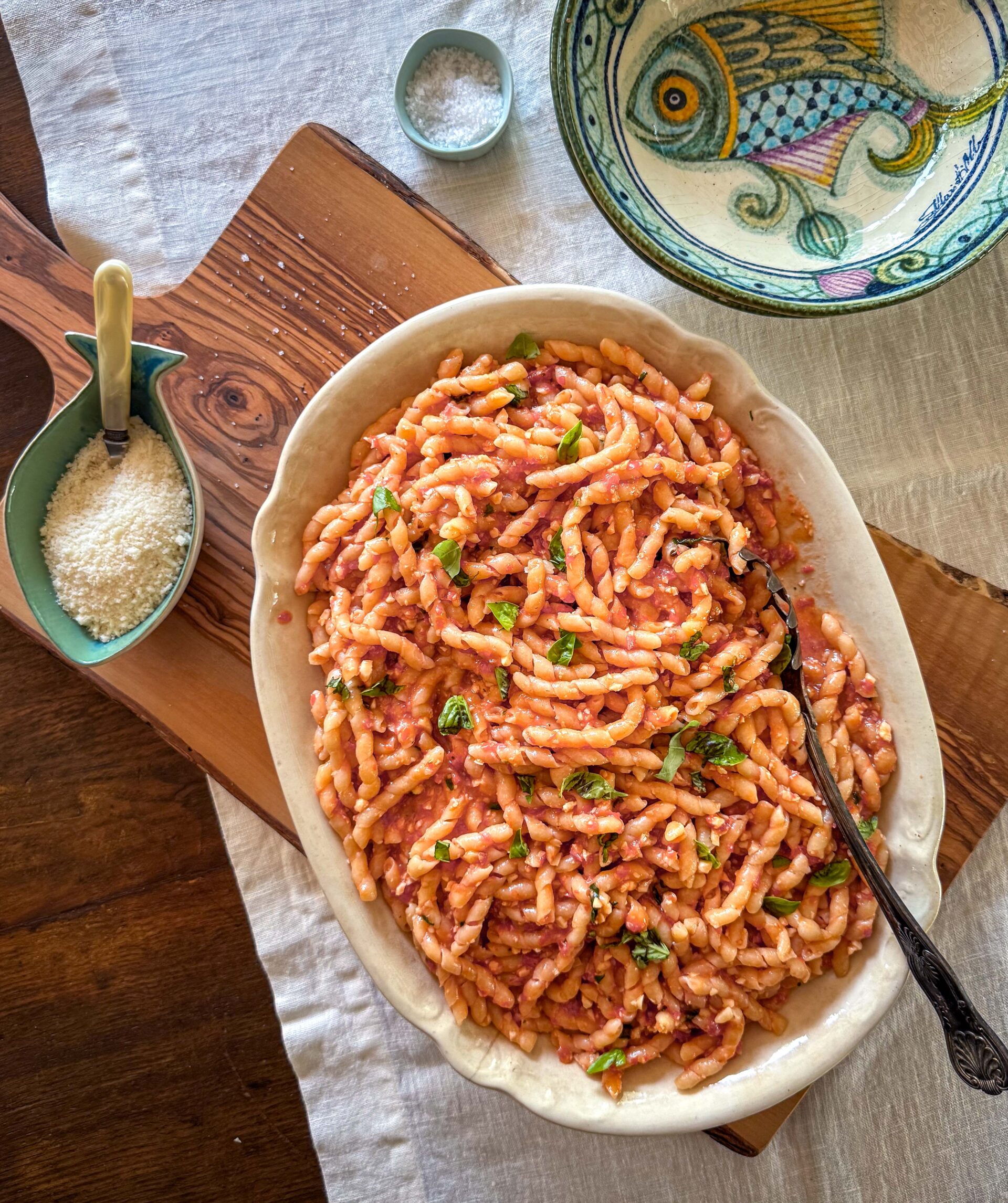
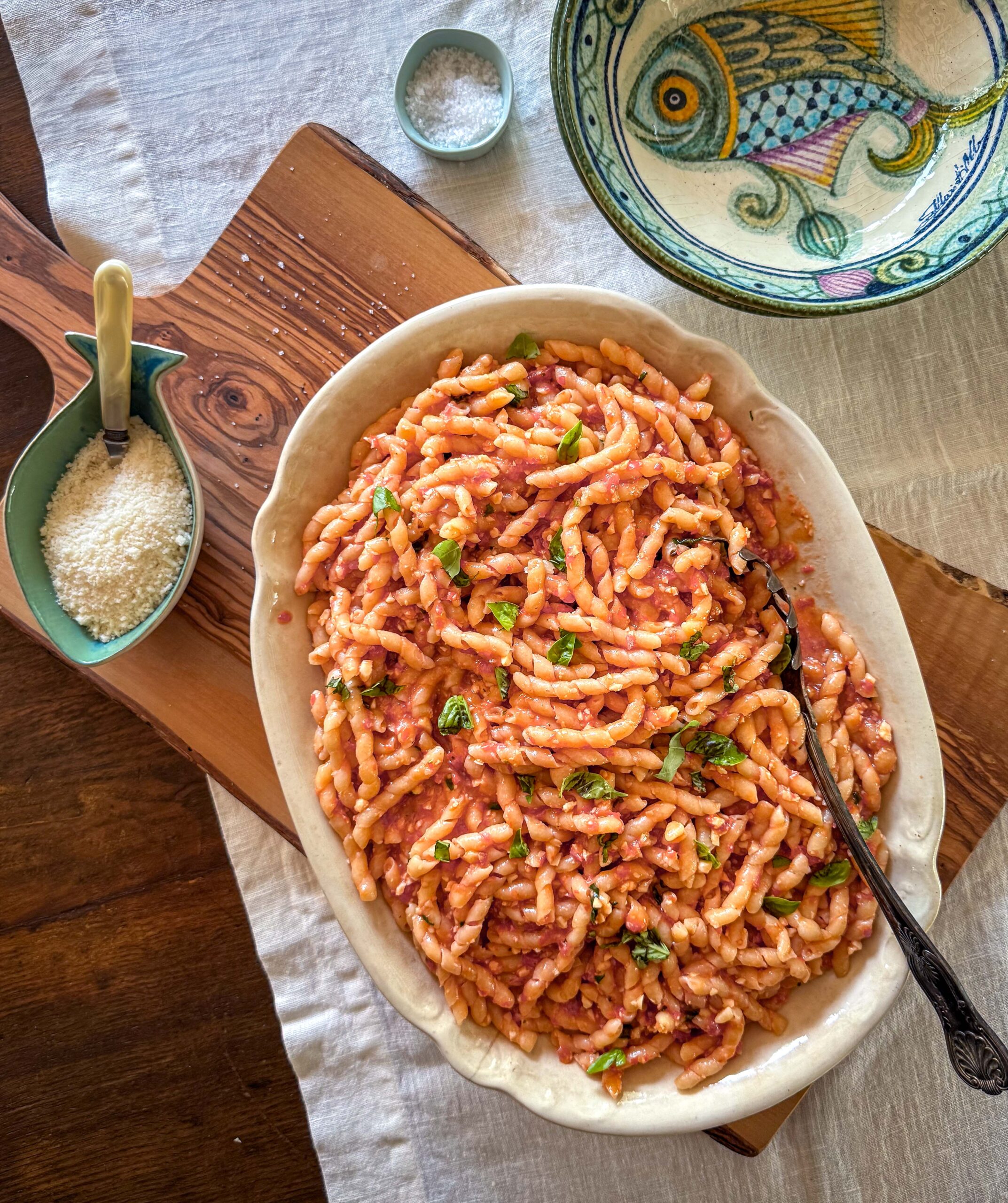
In Trapani, this pesto is typically served with busiate. When I cooked with the women of Salemi, we made the pasta by hand. We wrapped the pasta strands around knitting needles to create the distinctive corkscrew shape shown in the photo below. This is the perfect shape for the sauce, as the spirals allow the sauce to coat the entire strand. Back here in the States, I have made the pasta from scratch a few times but more frequently buy dried busiate at our local Italian market. Fusilli is easier to find in the US and works equally as well.
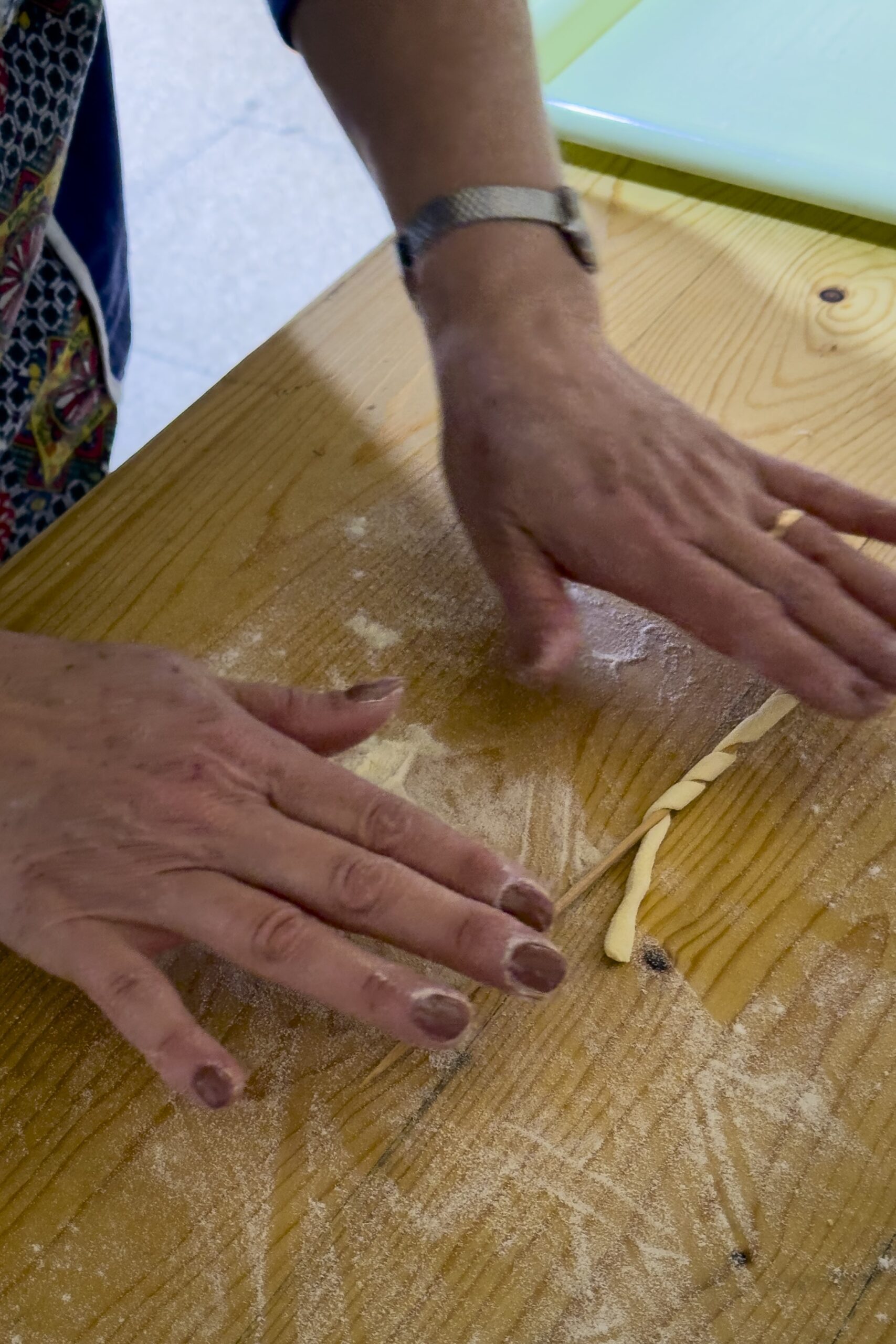
A quick note about the almonds. To me, whole almonds have more flavor than slivered or sliced almonds. If your market carries blanched whole almonds, definitely buy those. Mine does not, so I just blanch them myself. Boil water then pour the water over the almonds in a bowl. Let the almonds sit for 2-3 minutes until the skins become wrinkly and easy to slide off. Drain, rinse with cold water, and pop the almonds out of their skins. Allow them to air dry for a few hours. It does require a tad of forethought, but it is worth the effort. But please also note that I have used slivered or sliced almonds in a pinch, and the sauce is still delicious!
Happy summer ….now you too can add this yummy pesto to your rotation! Let me know if you make it and if there are other summer staples that you have on repeat! We can trade recipes like the salty sailors of the 1800s.
And before we andiamo….
Want more pesto? Of course more pesto! Try two more from our table:
That day in Salemi, the busiate came to the table two ways. Sicilian Busiate with Basil-Pistachio Pesto and Fried Zucchini is the other one, crowned with crisp zucchini and ground pistachios. The pistachios dusted on top are pure magic.
And from the other side of the island, try our Pasta with Pistachio Pesto and Shrimp, made with the pistachios of Bronte that grow in the volcanic soil of Etna. I first tasted pistachio pesto at a restaurant on the slopes of Etna so many years ago. I still remember that meal and this unusual and delicious pasta. Kids usually devour this one.
Enjoy these long days of summer. I am off to Montalcino in a few weeks for a quick trip to celebrate a friend’s birthday…..more when I return.
Un bacione,

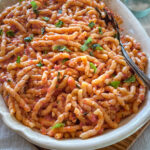
Pesto Trapanese (Sicily’s Tomato Almond Pesto)
- Total Time: 30-45 minutes
- Yield: 4–6 servings 1x
Description
Sicily’s no-cook answer to pesto. Raw tomatoes, almonds, basil, and pecorino, pounded together. Ready before the pasta water boils. Made for the hottest days of summer.
Ingredients
- 1 ½ pounds ripe tomatoes, cored and roughly chopped
- ¾ cup blanched whole almonds
- 2 garlic cloves
- 1 cup fresh basil leaves, packed
- ½ cup extra virgin olive oil
- ½ cup grated pecorino, plus more for the table
- 1 teaspoon salt, plus more for the pasta water
- 1 pound busiate, casarecce, or fusilli
Instructions
- Pulse the almonds and garlic in a food processor until they look like coarse sand. Add the tomatoes, basil, and salt and pulse again. Stop while the sauce still has texture. This is not a puree. With the machine off, stir in the olive oil and pecorino by hand.
- Taste. It should be bright, a little sweet, faintly bitter from the almonds. Adjust the salt. Let it sit at room temperature while the pasta cooks.
- Cook the pasta in well-salted water. Before draining, reserve a cup of the pasta water. Drain the pasta and toss it with the sauce off the heat, adding a splash of the reserved water if the sauce needs loosening. The sauce is never cooked, only warmed by the pasta. Serve with more pecorino!
Notes
- Tomatoes: In high summer, use the ripest tomatoes you can find, the ones that smell like tomatoes at the stem.
- Almonds: Blanched whole almonds are worth seeking out. If you blanch your own, let them air dry a few hours before using, as damp almonds turn the sauce pasty. Slivered almonds from the baking aisle will work in a pinch.
- Make ahead: The sauce holds at room temperature for a few hours. It can be made in the morning for dinner that night. Refrigerate only if you must and bring it fully back to room temperature before serving. Cold will mute the delicious aroma of the tomato.
- The purist’s note: In Trapani, this is made in a mortar, and the texture is genuinely different, looser and more fragrant. If you have twenty minutes and a big mortar, pound the garlic and salt first, then the almonds, then the basil, and fold in the tomatoes crushed by hand. The food processor version is the one I usually make, but if you have a few extra minutes, grab that mortar and pestle.
- Prep Time: 20 minutes
- Cook Time: 12 minutes (depending on the pasta)
- Category: Dinner, Lunch, Main course, Pasta
- Cuisine: Italian