

Oddio, this winter has really dug in here in Pennsylvania. At first, it was sort of fun. A foot of snow. That hush of life when everyone has to stay put. Heavy sweaters and socks. But then the freezing temperatures would not budge, and with a wind chill below zero degrees, it was even too cold to go to the market. I have been cooking lots of long-simmering braises and soups – one positive is that it has been the perfect way to clean out the freezer.
For someone who protests winter from the minute it arrives, this has been a brutal one. We have not had this much snow cover or temperatures this low in years and years. Our daily excitement has been watching the river banks freeze further together or listening to the ice floes slide past each other on the river. (That last one is actually pretty cool. And I am beyond grateful for where we live.

During an average winter, I am generally over the soups and braises by now and craving something bright and sunny; something that tastes like sunlight. This winter has only accelerated this desire. I have been buying citrus like there is no tomorrow, especially blood oranges.
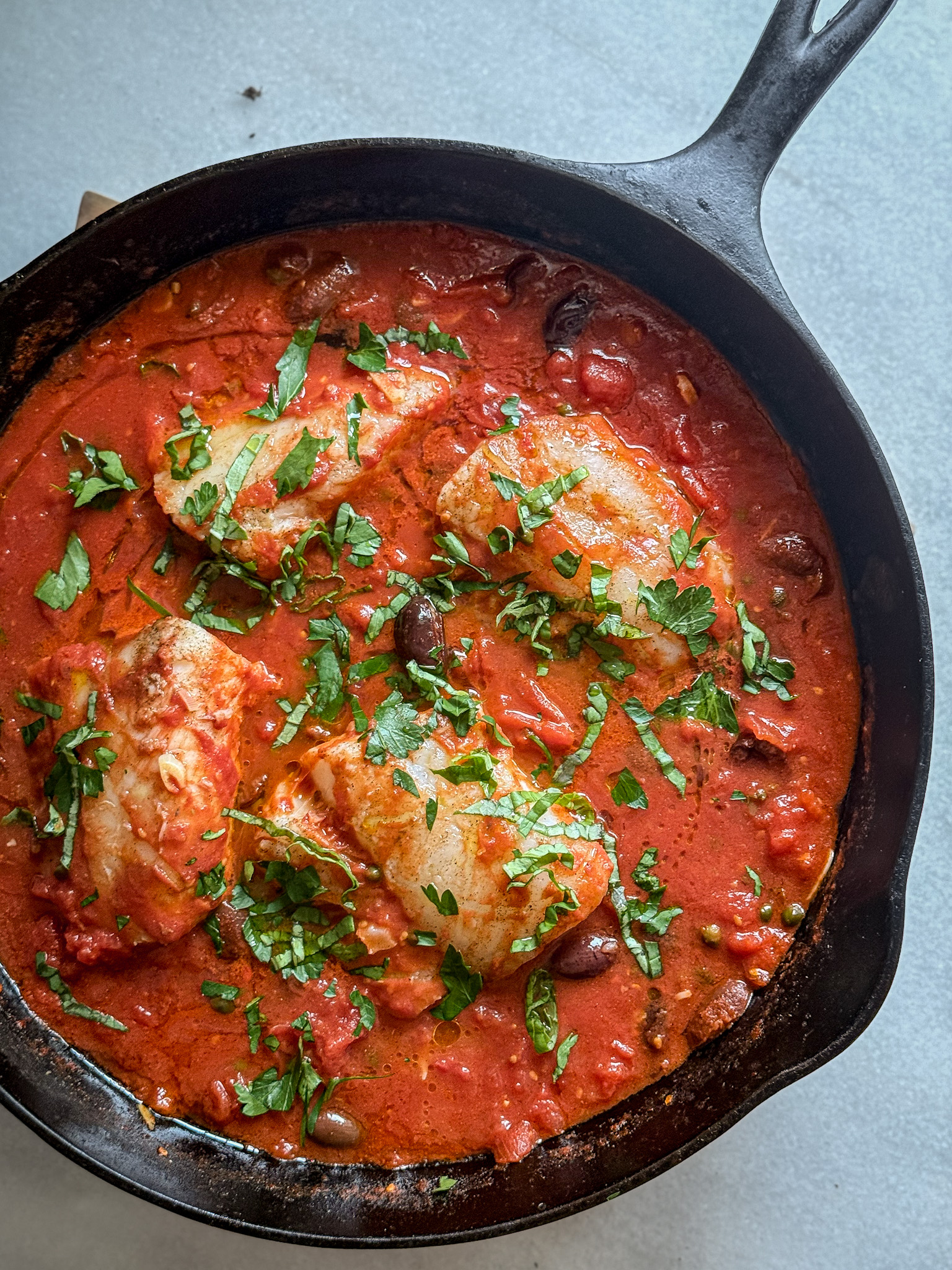
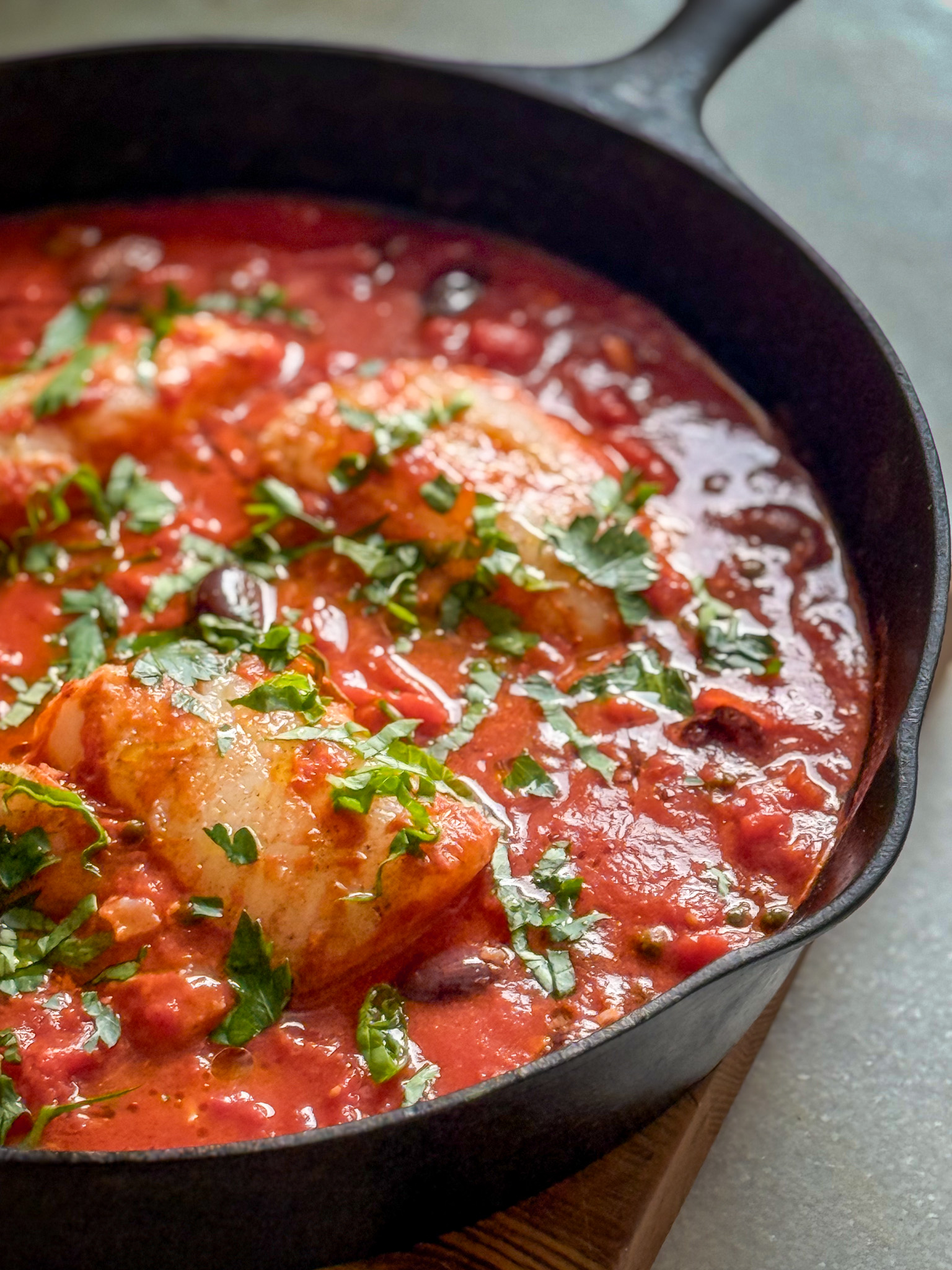
For dinner, I couldn’t face yet another brown supper. My antidote: Pesce alla Puttanesca, where the tomatoes taste alive, and the olives and capers wake up the palate! Bright, briny, happy!

Puttanesca sauce and I go way, way back.
I first learned to make this sauce sometime in the late 80s, and I was so proud of myself. I felt impossibly sophisticated. Capers! Olives! Anchovies melting into the oil like a big secret! I remember typing the recipe onto sheets of paper and handing them out at work to anyone who would take one. I was certain I was spreading important culinary knowledge.
Puttanesca sauce and I go way, way back.
I first learned to make this sauce sometime in the late 80s, and I was so proud of myself. I felt impossibly sophisticated. Capers! Olives! Anchovies melting into the oil like a big secret! I remember typing the recipe onto sheets of paper and handing them out at work to anyone who would take one. I was certain I was spreading important culinary knowledge.
Let’s spend a moment on the name for this sauce – puttanesca. The name comes from the Italian word puttana, a not-very-polite Italian word for a prostitute. In researching the name, there are endless stories about how that happened. It has been said that it was a dish cooked quickly between appointments. Or that it was a dish so fragrant that it drew people in from the street. Or perhaps a late-night meal that women could make from pantry staples after their day was done. Or then there is the less scandalous possibility – that the name is simply from the expression una puttanata, meaning a quick, thrown-together dish made from whatever was around. Think of it as the sharper, sassier cousin to marinara sauce, designed to be cooked quickly and eaten immediately.
No one really knows which is true. But what I think we can agree on is that the name reflects the spirit of the dish – fast, alive, bold, and possibly a little irreverent. Definitely not delicate nor fussy.
When we were in Naples last year, Joey and I searched for puttanesca as we had heard it was pure Neapolitan. But we were, surprisingly, told more than once that it was a Roman dish. Hmmm. So with a bit of research, I learned there are indeed two versions – one Neapolitan and one Roman. The Neapolitan version is fast, sharp, and assertive. No onions, no sugar, no heavy herbs. Garlic, anchovies, capers, olives, tomato, maybe some hot pepper. It should taste briny and alive, not mellowed.
The Roman version is deeper, more herbal, and slightly more cooked than the Neapolitan one. The main differences are that the Roman version uses oregano instead of parsley, usually has no fresh herbs at the end, and is simmered longer so the sauce becomes darker and more concentrated.
Definitely the sassier, briny Neapolitan version is my love language.
And truth be told, along with the parsley, I did toss in a bit of basil at the end. I have to believe that many Neapolitan home cooks did the same when basil was in season!
A few recipe notes:
- This is a very quick sauce. The garlic warms in olive oil, the anchovies dissolve, capers and olives follow, and the tomatoes simmer only briefly so they stay bright and sharp. It should taste vivid and briny, made in about the time it takes to cook pasta.
- Although often paired with fish, as in this version, the sauce is very versatile. Toss it with spaghetti for the classic preparation, spoon it over quickly sautéed chicken cutlets or thighs, or use it anywhere you want a bright, savory contrast. The taste should always remain the same, vivid and briny, as if it were made in the time it takes to bring a pot of water to the boil.
- Nestle the fish in the pan and simmer just until it begins to flake. You want the briny sea to remain the primary flavor, with the tomato adding brightness. And resist the instinct to move the fish around. Spoon the sauce over the top and let the gentle heat do the work.
- Because the tomatoes cook only briefly, use good quality canned ones, San Marzano if possible. Taste them first. If they taste acidic, add an extra splash or two of wine to the sauce, which will help to round out the edges naturally.
I have to admit that it was, in fact, mission accomplished. This dish brightened my mood – a bright and briny mixture that tasted a little like the sea.
And remember, Spring is 31 days away!!

Pesce alla Puttanesca
Description
Tender fish gently poached in a bright, garlicky tomato sauce with olives, capers, and a hint of chili. This classic southern Italian puttanesca-style dish is briny, savory, and ready in about 30 minutes, perfect with crusty bread to soak up every drop.
Ingredients
- 4 white fish fillets, such as cod, halibut, about 6 ounces each
- 3 tablespoons extra-virgin olive oil
- 3 large cloves garlic, thinly sliced
- 1/2 teaspoon red pepper flakes
- 6 anchovy fillets in oil (less if you would prefer less briny)
- 1/2 cup dry white wine
- 1 (28-ounce) can whole peeled tomatoes, crushed by hand
- 3 tablespoons capers, rinsed well if salt-packed
- 1 cup Gaeta or black olives, pitted and lightly crushed
- 2 tablespoons chopped fresh parsley
- Handful small basil leaves, torn
- Kosher salt
- Black pepper
Instructions
- Pat the fish fillets dry and lightly sprinkle with salt and pepper. Set aside while you prepare the sauce.
- In a large skillet with a lid, warm the olive oil over medium heat. Add the garlic, crushed red pepper, and anchovies. Stir until the garlic has softened and the anchovies dissolve, about 2 minutes.
- Add the white wine and let it reduce briefly, then add the tomatoes and bring to a simmer over medium-high heat. Reduce the heat to medium-low and simmer until the sauce has thickened slightly, about 6 to 8 minutes.
- Stir in the capers and olives. Simmer for a few more minutes. You want the sauce to be loose, not too thick. Taste and adjust salt and pepper, if needed.
- Nestle the fillets into the sauce. Spoon a bit of sauce over the fish. Cover partially, and cook gently until the fish is opaque and just cooked through, 4 to 7 minutes depending on thickness. Do not flip.
- Turn off the heat. Sprinkle with parsley and basil. Drizzle with a little extra-virgin olive oil and serve!
Notes
- This is a very quick sauce. The garlic warms in olive oil, the anchovies dissolve, capers and olives follow, and the tomatoes simmer only briefly so they stay bright and sharp. It should taste vivid and briny, made in about the time it takes to cook pasta.
- Although often paired with fish, as in this version, the sauce is very versatile. Toss it with spaghetti for the classic preparation, spoon it over quickly sautéed chicken cutlets or thighs, or use it anywhere you want a bright, savory contrast. The taste should always remain the same, vivid and briny, as if it were made in the time it takes to bring a pot of water to the boil.
- Nestle the fish in the pan and simmer just until it begins to flake. You want the briny sea to remain the primary flavor, with the tomato adding brightness. And resist the instinct to move the fish around. Spoon the sauce over the top and let the gentle heat do the work.
- Because the tomatoes cook only briefly, use good quality canned ones, San Marzano if possible. Taste them first. If they taste acidic, add an extra splash or two of wine to the sauce, which will help to round out the edges naturally.
- Category: Dinner